
The Nazi Occupation of the House
The Glass RoomThis flow traces the occupants’ changing responses to German authority as the house is seized, repurposed, inspected, and threatened by defeat.
increasing Bearing strength in each event
 decreasing
Bearing strength in each eventdecreasingThe House Is Taken
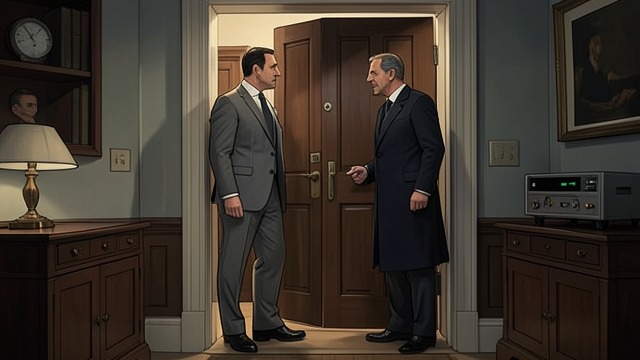
Occupation Becomes Domestic
Property seized
The house is taken from the Landauers under official authority. Laník faces a representative who insists that the new arrangement is legal, though legality offers no meaningful remedy to the former owners.
The seizure turns political power into a fact of domestic space.
The caretaker’s position
Laník’s willingness to accommodate the new regime is shaped by self-interest and survival. His presence complicates the simple distinction between victim, collaborator, and caretaker.
Stahl Establishes the Centre
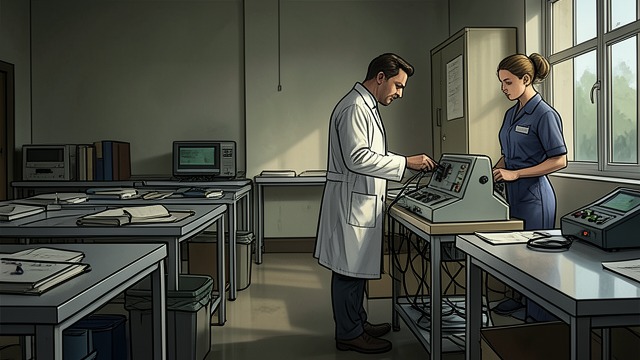
A New Authority Moves In
Scientific staff arrive
Werner Stahl organizes a biometric centre in the confiscated house. Staff and machines transform family rooms into offices, laboratories, and measurement stations.
The process is efficient enough to make a violent seizure look like ordinary administration.
Local resistance is quiet
Laník does not offer meaningful opposition, while the neighbors watch from behind curtains. The house’s conversion proceeds through paperwork, equipment, and a series of normalized decisions.
Heydrich Inspects the Work

Authority Wants Utility
A direct examination
Heydrich visits the centre, asks about its ability to identify Jews, and demands faster results. Stahl explains the research but cannot give the certainty the regime wants.
The inspector’s presence makes the political stakes of the work explicit.
A threat in polite form
Heydrich handles the staff and their instruments with confidence while controlling what happens to his own measurements. The visit demonstrates that scientific scrutiny is subordinate to political power.
The Centre Closes
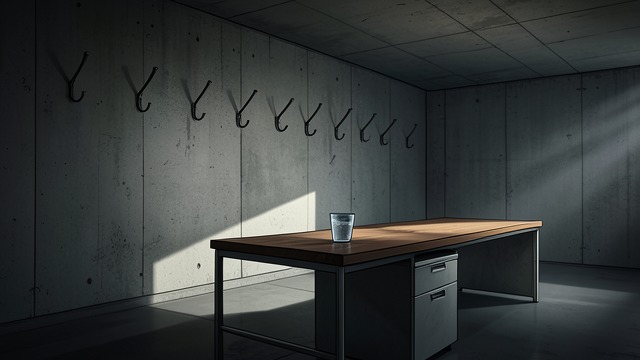
Disappointment and Redeployment
Research rejected
The Reichsprotektor’s office closes the centre because it has not found clear biological criteria for racial classification. Researchers return to other posts, while machines and files are sent elsewhere.
The closure reveals the gap between racial ideology and measurable evidence.
Persecution continues
The state’s failure to prove its categories does not stop it from acting on them. The people targeted by the regime remain endangered even as the research unit disperses.
Occupation Ends, Power Remains
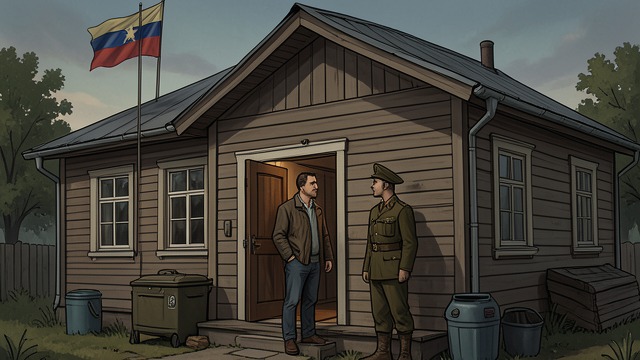
New Occupants, Old Vulnerability
The battle reaches the city
German forces withdraw as Soviet troops capture Město. Laník and his sister survive bombardment and negotiate with new soldiers at the house.
The people in the building have little control over which armed force claims it.
A changing official story
After the war, Laník presents himself as a defender of the house and later gains local authority. The transition changes the flag over the building but does not eliminate the struggle over who can define its history.
After the German occupation of Město
In the early months of occupation
During Reinhard Heydrich’s visit
Later in the war
During the Soviet capture of Město and after the war
